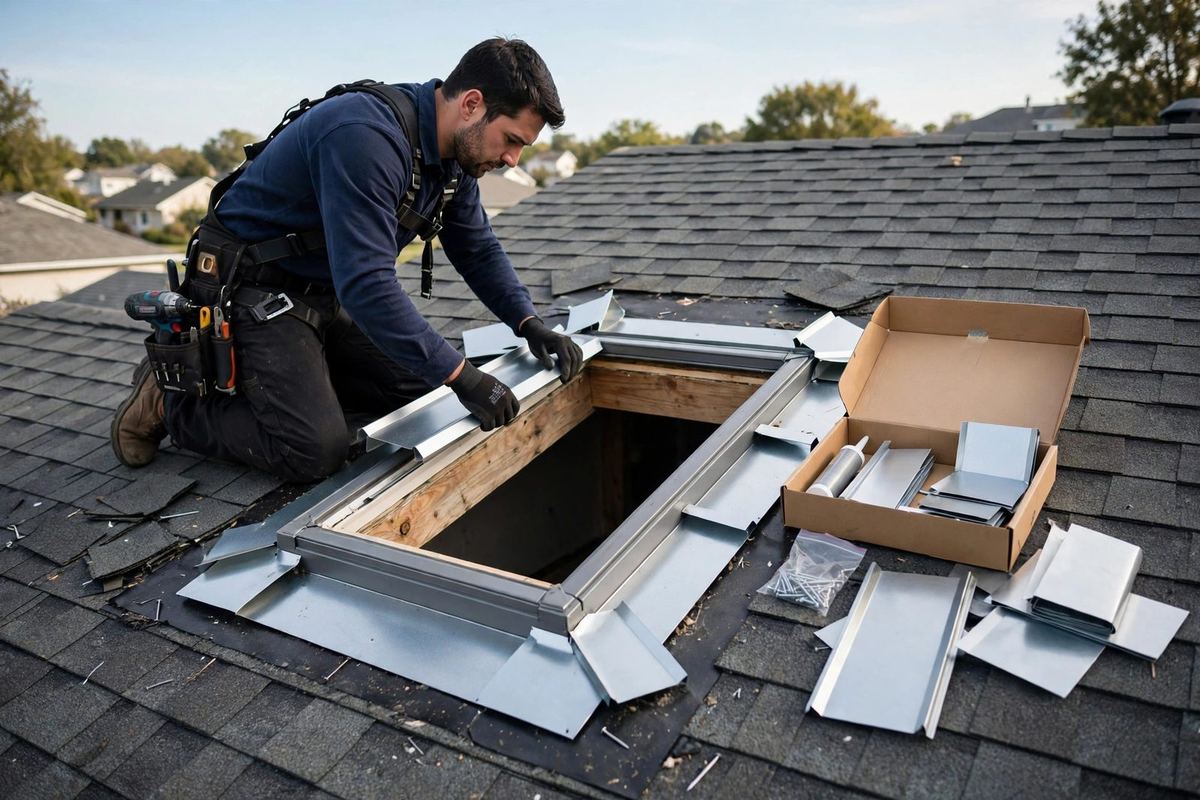
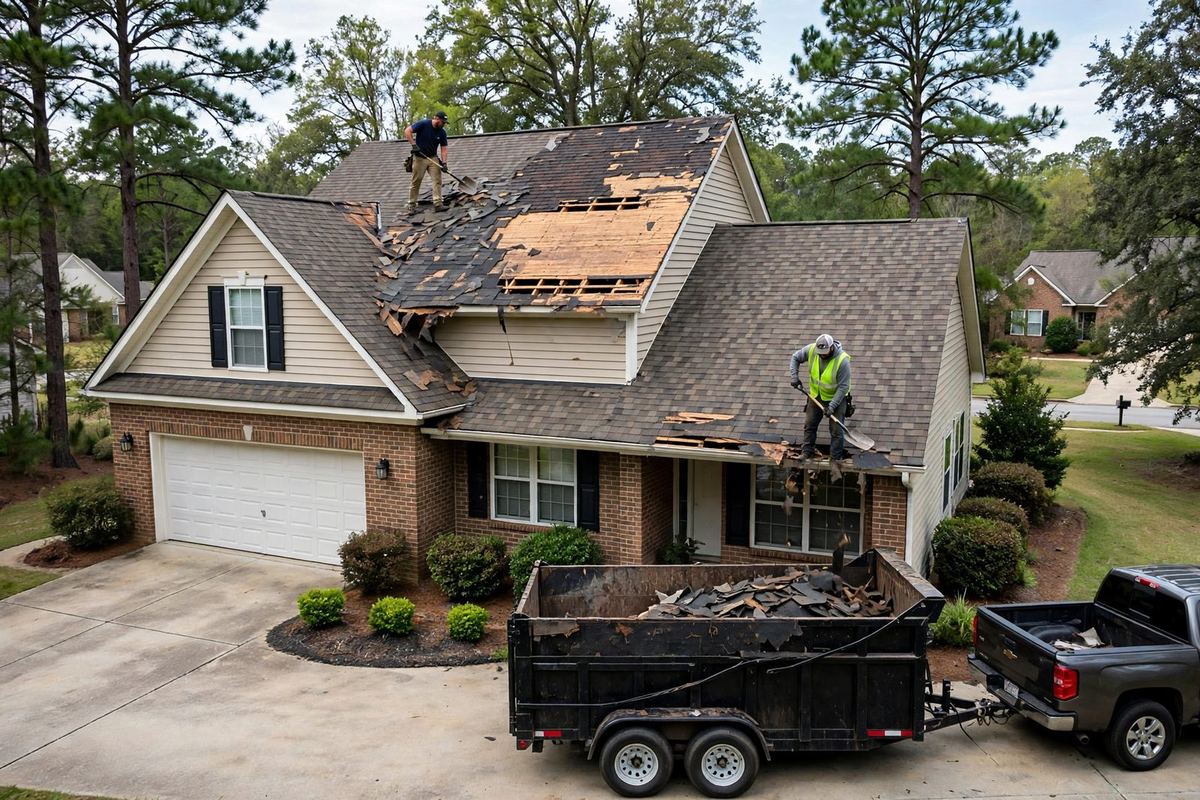
Skylights age on a clock similar to roofs: seals fail and insulated glazing fogs, acrylic domes craze and crack, flashing corrodes, and operators on venting units wear out. When the unit itself has reached end of life, replacement into the existing opening — with a brand-new flashing system installed while the roof is open around it — is usually the correct scope, and it pairs efficiently with a roof replacement when both are due. We measure the existing opening and match modern unit sizes to it where possible.
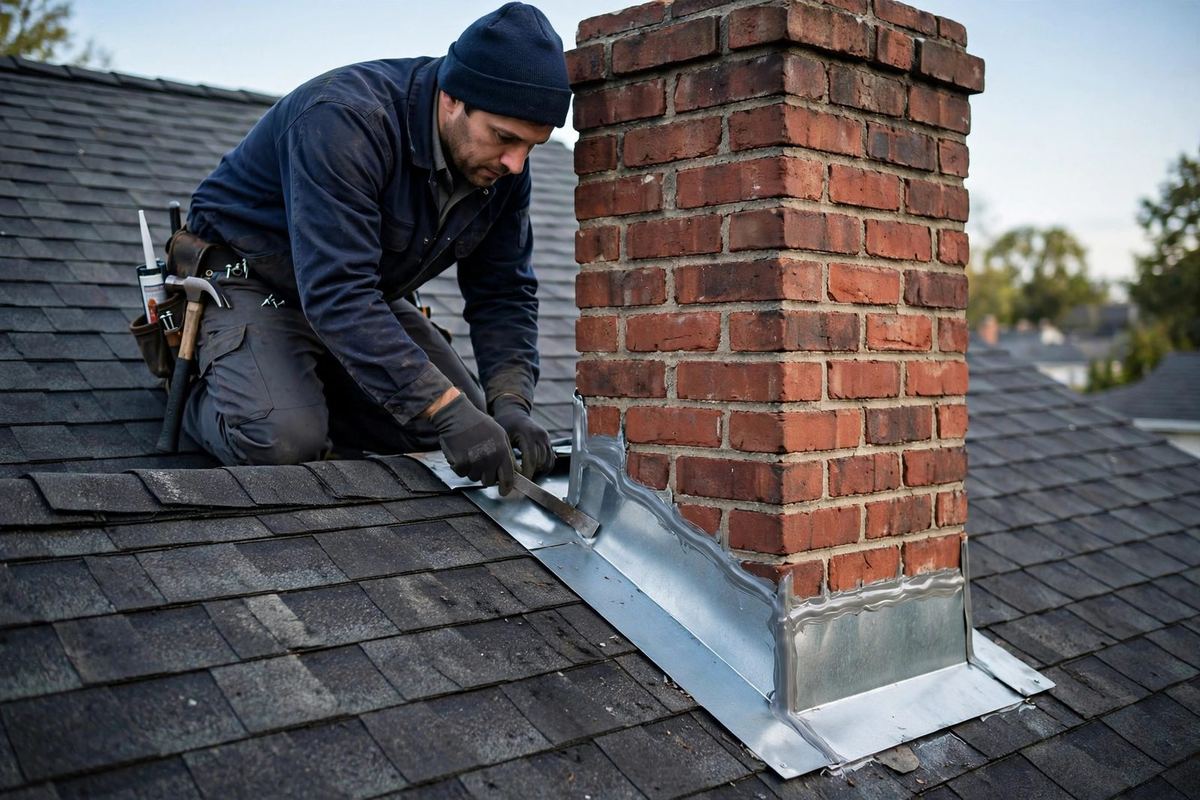
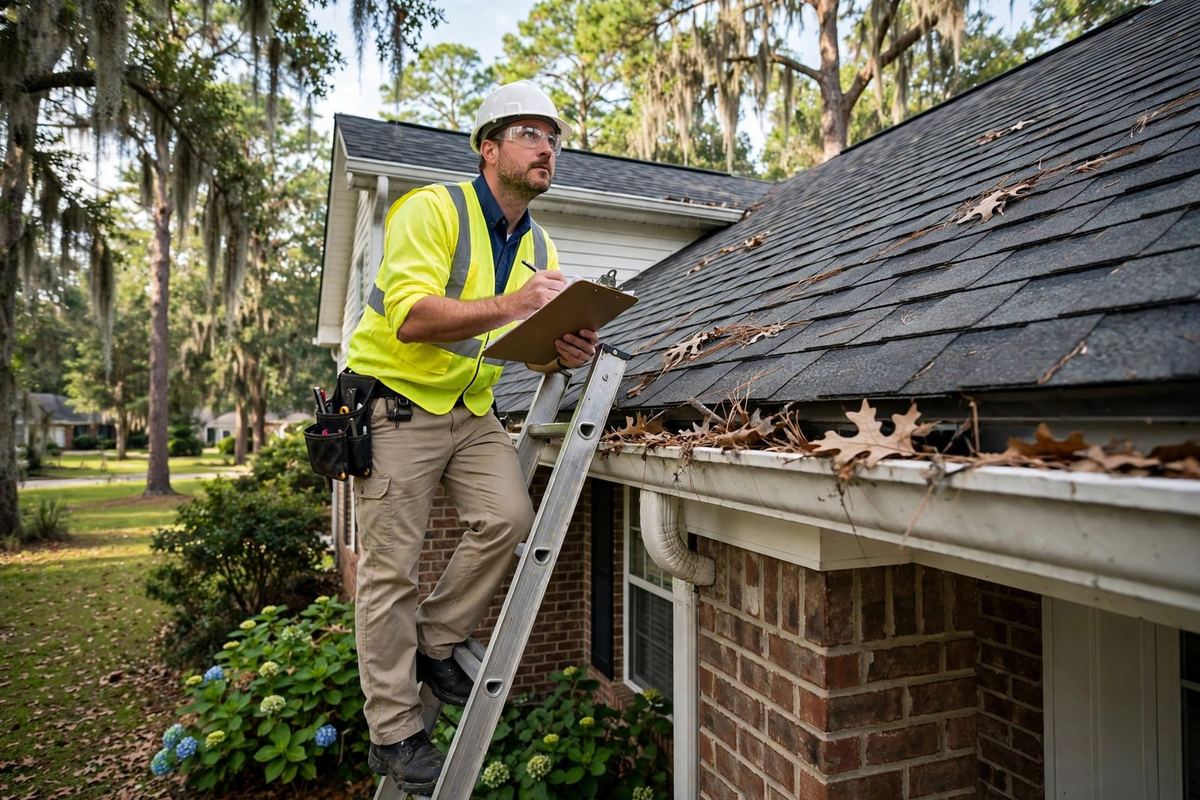
A stain under a skylight has three possible authors: the skylight's own seals or glazing, the flashing system around it, or the roofing above it — a valley or shingle fault can deliver water that exits at the skylight opening. Our leak detection process separates these before quoting, inspecting the flashing courses, the unit's weep and seal condition, and the roof field uphill of the opening. Repairs then target the real failure: reflashing, unit resealing or replacement, or the roof repair above — not all three billed speculatively.
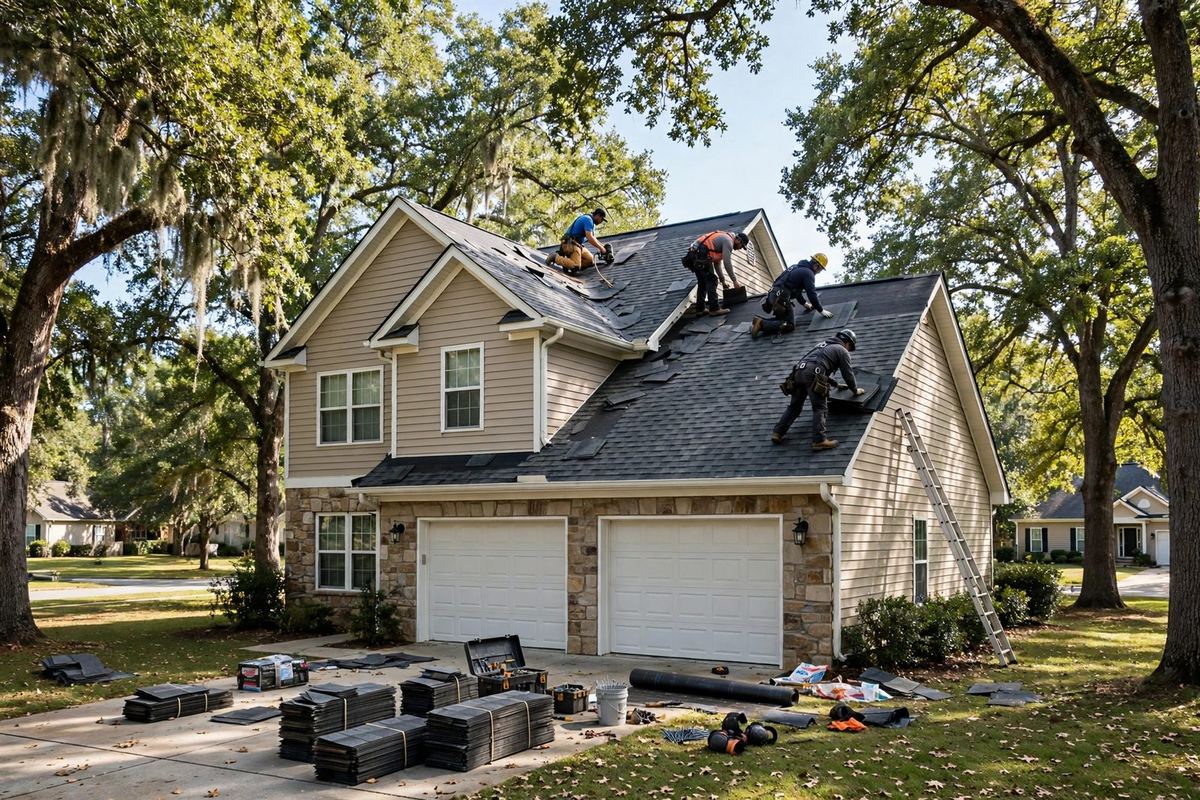
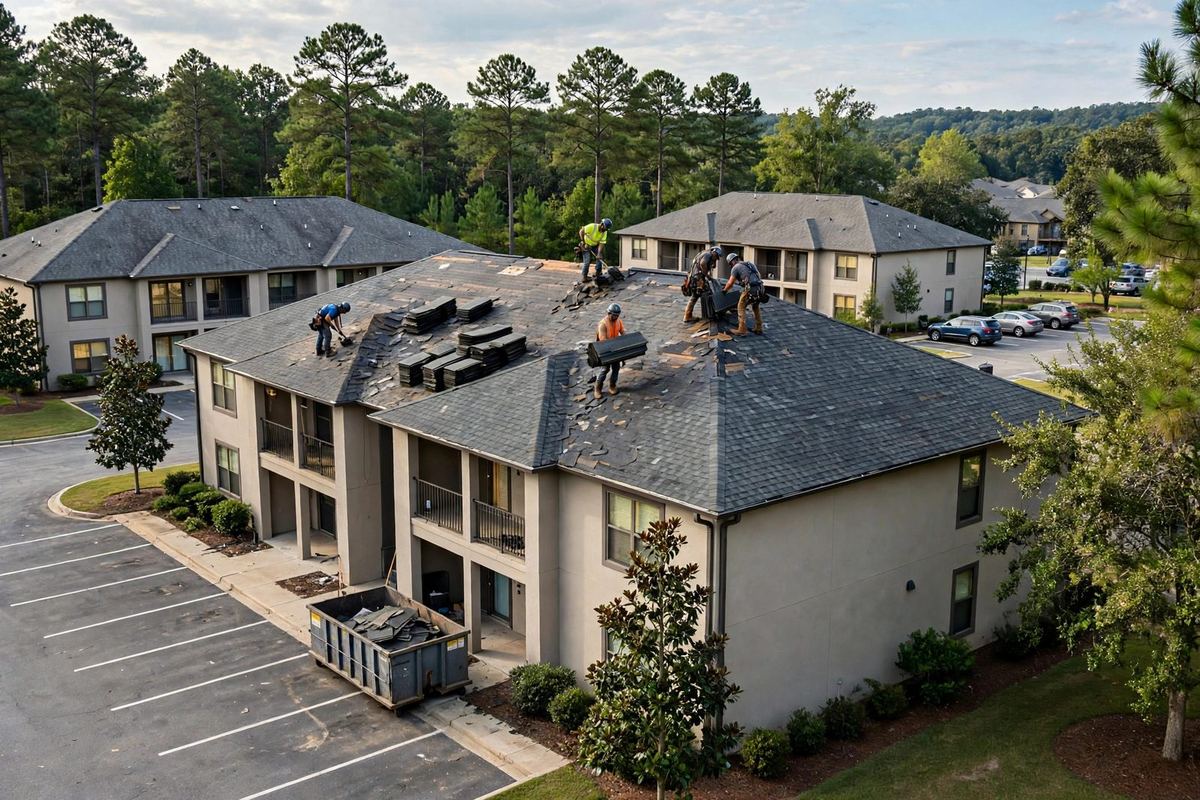
Timing matters: the cheapest, cleanest moment to add or replace a skylight is during a roof replacement, when flashing integrates with brand-new shingles and membrane. Standalone installations are entirely feasible — we flash into existing roofs carefully — but the surrounding shingles must be sound enough to weave into, which we verify at assessment. Interior work such as the light shaft and trim is coordinated and scoped clearly in the quote, so the daylight you ordered is the daylight you get, finished.